A sense of place
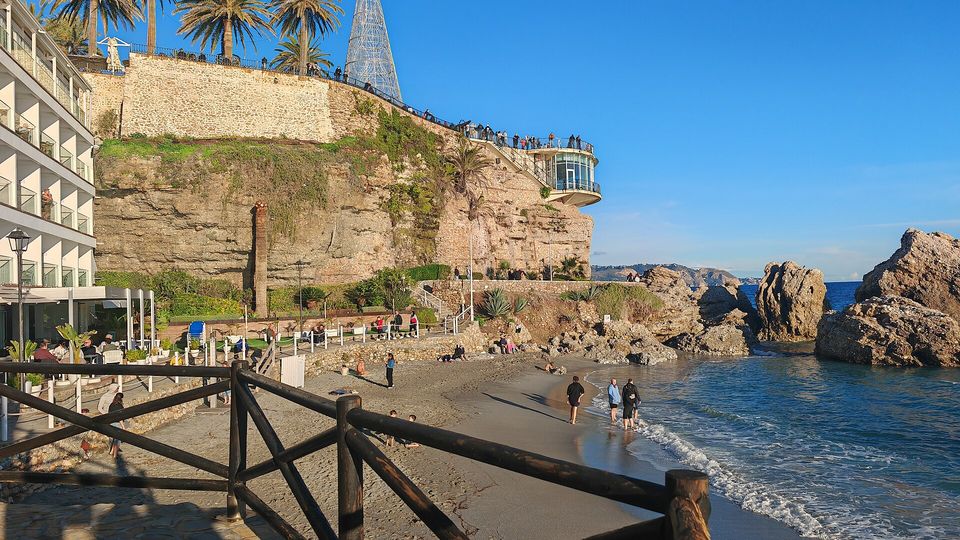
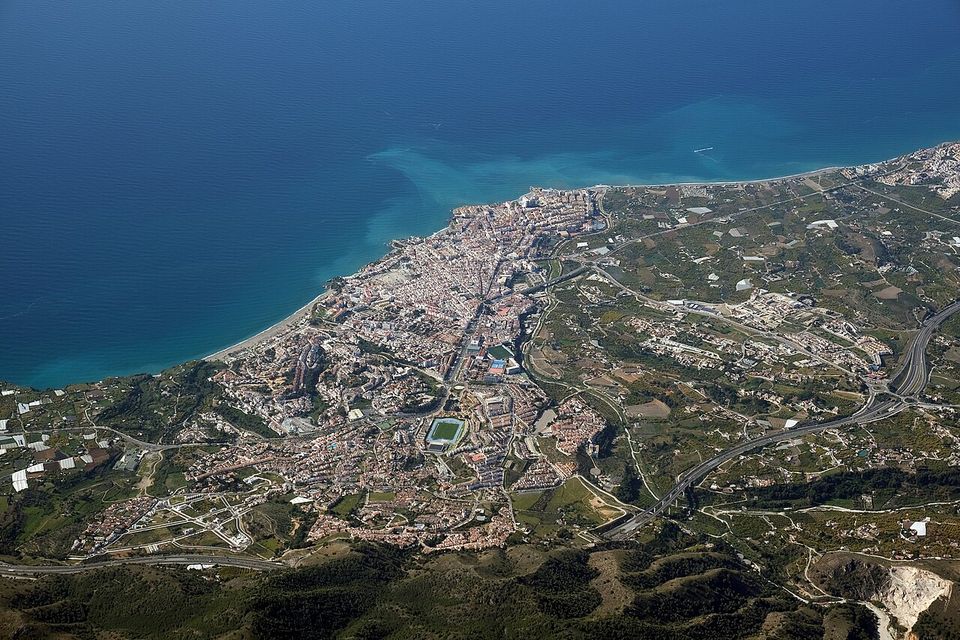
Nerja offers a different stretch of Málaga’s coast, with a town centre overlooking coves and cliffs. It works best as a focused coastal outing, not a hurried string of stops.
History and culture
Nerja belongs to the Axarquía landscape of coastal cliffs and an inland mountain backdrop. Its caves add a much deeper timescale: archaeological evidence records prehistoric human presence in the area. The town’s traditional architecture and seafront viewpoints represent a later, lived-in coastal culture. Seeing both the centre and, if you choose it, the cave helps distinguish Nerja from a beach resort that could be anywhere on the coast.
What to see
Begin at the Balcón de Europa and explore nearby streets. Choose a beach if conditions suit, or plan the Cueva de Nerja as a separate ticketed part of the day. The Balcón de Europa is valuable for understanding the headlands and small beaches around the centre, not just for its familiar photograph. Burriana offers a different beach setting from the coves below the viewpoint. The Cueva de Nerja changes the focus from sea to geology and prehistory, so give it proper time rather than adding it between swims. Keep town walking, beach access and cave transport as separate planning decisions.
With children
Check beach access before carrying a buggy or beach equipment down steps. For the cave, consult the operator’s physical-access guidance before buying family tickets.
A suggested day
Suggested day: Balcón de Europa → old streets → lunch → beach, or a pre-booked cave visit. Keep a realistic margin for the east-coast return journey.
Good to know
Use the official cave website for tickets and current conditions. At beaches, follow flags and local instructions; a scenic cove is not a safety guarantee.